The Gantry at LC-39 has reopened at Kennedy Space Center Visitor Complex with a bold new guest experience
Once the primary public viewing platform for viewing a Space Shuttle on the pad, The Gantry at LC-39 has been transformed into a multi-zone attraction at Kennedy Space Center Visitor Complex.
With rocket launches now exceeding 90 annually and commercial spaceflight accelerating, the newly reimagined Gantry brings guests closer than ever to the future of space exploration.
The experience combines real-time mission data, theatrical immersion and a suite of bespoke audiovisual systems to create an environment where science and spectacle intersect.
Far more than a renovation, the project demanded a ground-up rethinking of how digital media, storytelling and live spaceflight coverage could coexist in one of the most challenging environments for technology deployment.
A revolutionary Kennedy Space Center
To meet that challenge, Kennedy Space Center Visitor Complex engaged LED Studio to develop a series of custom-engineered LED display solutions capable of performing in extreme conditions.
Unlike controlled indoor environments typically found in museums or attractions, The Gantry’s outdoor and semi-enclosed spaces are subject to corrosive salt air, high humidity, frequent tropical storms and even the seismic effects of nearby rocket launches. Every display element had to be designed not only for brightness, clarity and visual performance, but for long-term durability in this uniquely demanding setting.
At the centre of the outdoor plaza is an L-shaped gantry display, which is built directly into the architecture of the space and synchronized with a dramatic AI-guided simulation. This theatrical sequence, which concludes with a full-scale rocket engine test fire, has become a defining moment within the attraction.
One of the most complex technical integrations, a 24-foot by 14-foot Fortis Plus display located ocean-front at the new launch viewing stadium delivers real-time launch coverage from NASA, SpaceX, ULA and others.
Constructed from marine-grade materials and mounted on steel pilings driven 25 feet into the ground, the display serves as both a cinematic screen and a structural element, engineered to withstand hurricane-force winds and direct exposure to the elements.
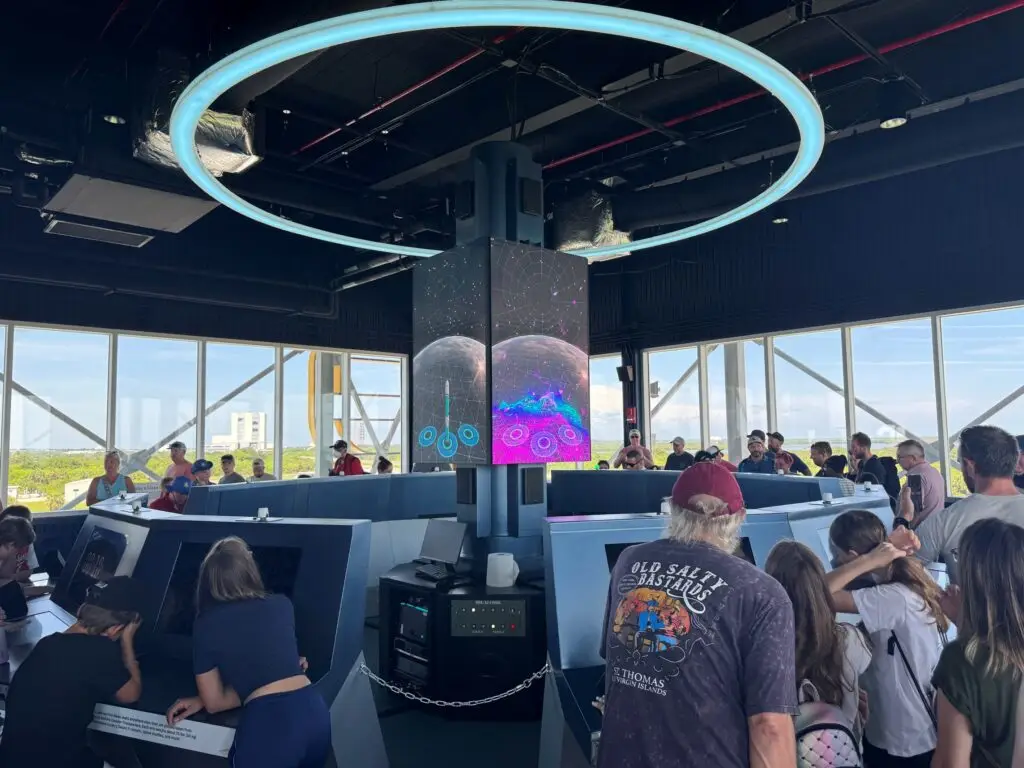
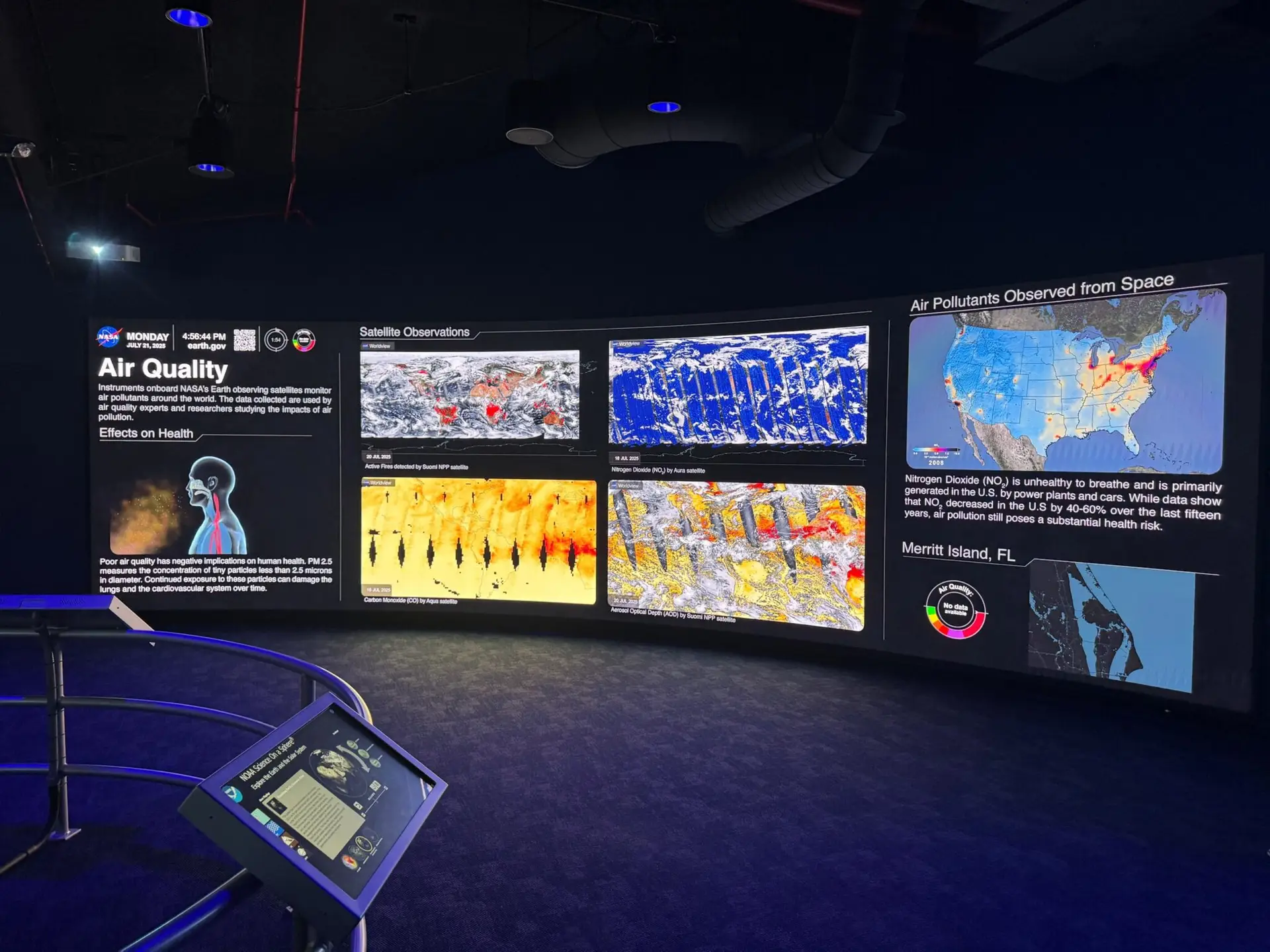
The Earth Information Center’s Hyperwall features a curved 32-foot by 9-foot display that transforms real-time satellite data from NASA and JPL into a continuous visual narrative and on the fourth floor, the Rocket Lab offers a hands-on engineering challenge where guests design, simulate and virtually launch their own rockets.
“Fuse education and entertainment in a way that truly inspires the next generation of space explorers”
Richard Bahorich, Project Manager, Kennedy Space Center Visitor Complex says: “Finding the right technology to bring our immersive experiences to life is always a challenge, especially when we’re up against some of the harshest environmental conditions imaginable.
“Everything here has to be engineered beyond standard specifications, particularly the displays, which would quite literally dissolve if not built to exacting standards. What LED Studio delivered exceeded expectations.
“The visual clarity, durability and seamless integration across the experience have helped us fuse education and entertainment in a way that truly inspires the next generation of space explorers.”
Images: Kennedy Space Center