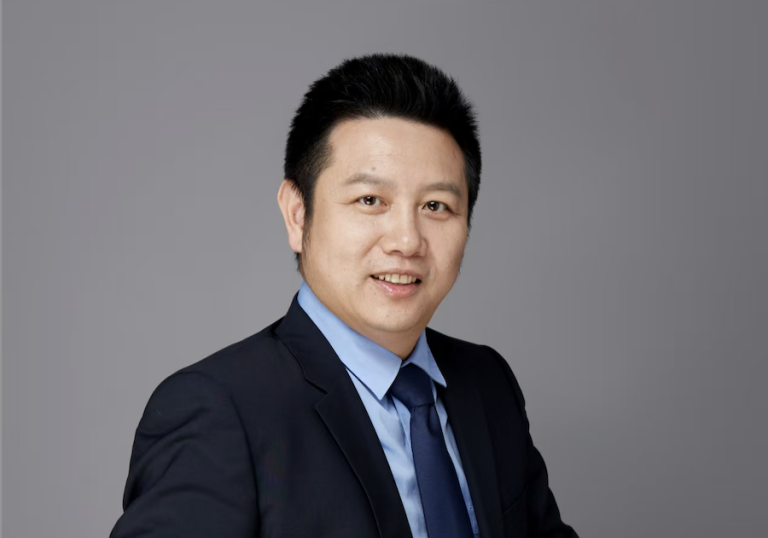
From “scale expansion” to “experience first,” China’s theme park industry is moving away from the simple accumulation of hardware and onto a new track focused on content, emotion, and technology. In an interview with InterPark, Haichang Ocean Park’s Board Chairman Liu Jiangtao stated that the most significant shift in the industry today is that operational capability, IP depth, and technology integration have become the core competitive barriers – and that Chinese companies are accelerating their entry into international markets through distinctive cultural content, full-industry-chain integration, and digital operations.

Operational Capability Replaces Hardware Competition; Emotional Value Drives Repeat Spending
Liu Jiangtao believes that China’s amusement industry is undergoing a structural transition from a “scale expansion phase” to a “quality cultivation phase.” Visitor demand has shifted deeply from sightseeing towards leisure holidays and the pursuit of emotional value. “Operational capability is no longer confined to what happens inside the park – it requires the continuous creation of content events with viral potential, so that guests naturally develop an emotional resonance and a desire to share,” he said. As an example, he cited how Haichang Ocean Park has leveraged its marine conservation strengths to develop animal star IPs such as orca “Pangdouding” and walrus “Oscar,” amassing over two million online followers, and successfully converting that online traffic into IP merchandise and cultural product sales through offline meet-and-greet events and birthday celebrations – forming a seamless online-to-offline industry loop.
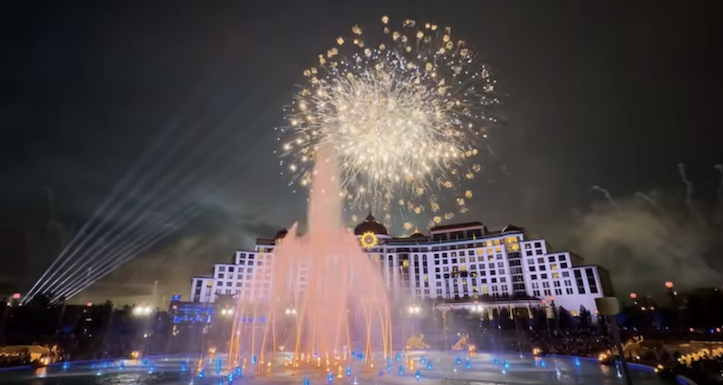
The most visible progress in the industry is the rise in secondary spending driven by deep IP operations. Liu Jiangtao noted that domestic theme parks’ secondary spending ratio is climbing from around 30% towards international benchmarks such as Disney’s approximately 70%. Since introducing the “Ultraman” and “One Piece” IPs in 2022, Haichang has continued to develop themed zones, hotels, dining, and other experiences around these properties. In 2025, Shanghai Haichang launched over 120 new SKUs in collaboration with cultural and creative brands, and partnered cross-industry with National Geographic, Tencent Games, and others. At the same time, technology upgrades have become a new engine – bionic whale sharks, international light and sound shows, and AI-generated marketing content keep the experience fresh for returning guests. This shift from “competing on scale” to “competing on content, experience, and operations” led to Haichang being named one of the “Global Top 10 Theme Park Operators” in 2024, with its Shanghai project ranking among the “Global Top 25 Theme Parks.”
“Guests naturally develop an emotional resonance and a desire to share”
Asset-Light Export and Localisation, with a Focus on the “Belt and Road”
When discussing the international competitiveness of Chinese companies, Liu Jiangtao summarised it in three points: distinctive Chinese cultural content (creating irreplicable differentiation), full-industry-chain integration capability (from planning and design to operational closure), and digital operations combined with IP commercialisation. Leveraging its world-class marine biology conservation technology, Haichang stood out during cooperative evaluations in Saudi Arabia and is now expanding overseas through an asset-light service and operations model (OAAS – Operations, Assets, and Solutions as a Service), exporting its proven operational systems to markets along the “Belt and Road” such as Saudi Arabia, the Philippines, and Indonesia.
“The tourism markets in the Middle East and Southeast Asia are in a period of rapid growth, and Saudi Arabia’s Vision 2030 is generating strong demand for large-scale cultural tourism projects,” Liu Jiangtao acknowledged, adding that the primary challenges lie in cross-cultural operations and localisation – finding the right balance between international standards and local culture. He emphasised that what Chinese amusement companies most need to strengthen is the alignment of brand recognition and cultural understanding. Technical capability has already reached an internationally advanced level, but global brand reputation still has room to grow. Haichang is building trust through an “asset-light export combined with deep localisation” approach – for example, signing a memorandum of understanding with the Saudi Ministry of Investment to develop the country’s first large-scale ocean park. Domestically, Beijing Haichang Ocean Park is being built with a 4.2 billion yuan investment by Tongzhou Urban Construction, with Haichang responsible for operations, and is scheduled to open in 2027 – achieving a complementary division of investment and operational strengths.
“Biology plus technology” products such as bionic whale sharks”
Content Ecosystems, Technology Synergy, and Asset Lightweighting
Looking ahead over the next three to five years, Liu Jiangtao believes China’s amusement industry will enter a high-quality development phase characterised by “slowing growth, structural optimisation, and innovation-driven progress,” with competition centring on three directions: content ecosystemisation, technology synergisation, and asset lightweighting. Haichang will continue to advance an integrated export model combining “asset-light operations, marine science education, and operational services,” packaging its marine conservation technology, performing arts creation, and park operations into standardised service products for replication in emerging markets both at home and abroad. At the same time, the company is exploring the overseas export of “biology plus technology” products such as bionic whale sharks, and is incubating its own IPs to develop new business formats including derivative consumer products and immersive entertainment.
“China’s amusement industry has moved from a one-way era of ‘bringing things in’ to a two-way era of ‘bringing things in and taking things out,'” said Liu Jiangtao. His message to international peers is clear: Chinese companies are not only among the world’s leaders in scale, but also possess the product strength, operational capability, and technological innovation to compete on the same stage. Haichang hopes to use ocean culture as a bond, and with an open, pragmatic, and mutually beneficial outlook, to explore the next possibilities for the cultural tourism industry together with global partners; “not replicating a global model in China, nor replicating a Chinese model globally, but co-creating an entirely new experience that belongs to this era.”
Image: Haichang Ocean Park