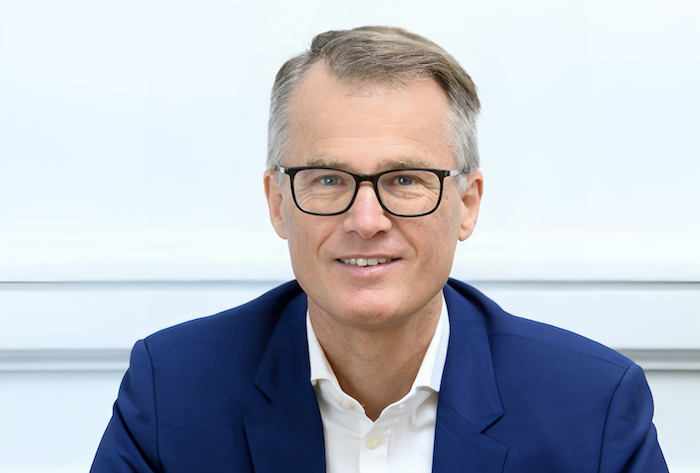
From “who builds the biggest” to “who is truly remembered,” China’s theme park industry is undergoing a fundamental shift in the logic of competition. At the heart of this transformation is a simple but powerful question: can a park create a lasting emotional bond with its guests? In an interview with InterPark, John Jakobsen, Chief Strategic Portfolio Development Officer at Merlin Entertainments, offered a clear-eyed view of this new era – and explained how LEGOLAND Shanghai Resort is answering that question by fusing the universal language of play with the depth of Chinese cultural identity.
Emotional Connection Replaces Scale Competition; Experience Quality Becomes the New Threshold
Jakobsen identifies three structural shifts currently reshaping the global amusement and cultural tourism market – and all three point in the same direction. “Today, the core competitiveness lies in who can be truly remembered by guests and who can build lasting emotional connections,” he said, framing the challenge in terms that go well beyond ride counts or park acreage.
The first shift is from hardware to content. Where large-scale attractions were once sufficient to draw crowds, Jakobsen argues that cultural content cultivation, IP development, and operational capability have now become the critical experience
thresholds – and that the industry is steadily moving from heavy asset investment towards service quality and content innovation. The second shift is technological: continuous advancements in immersive and interactive formats are opening new possibilities for product development that were simply unavailable a decade ago. LEGOLAND Shanghai’s “LEGO® Monkie Kid Flower Fruit Mountain Adventure” ride – which combines physical sets, sound-and-light effects, and ride systems into a seamless immersive journey – is a direct expression of this direction.
The third, and perhaps most decisive, shift is in consumer expectations. Guests are making more rational choices and scrutinising experience quality with greater care. At LEGOLAND Shanghai, three-generation family visits and high-quality shared time have emerged as the park’s defining demand. The guest is no longer just a visitor; they are a participant in a family memory being actively created. This shift from the transactional to the relational is reshaping every dimension of how leading parks design, operate, and measure success.
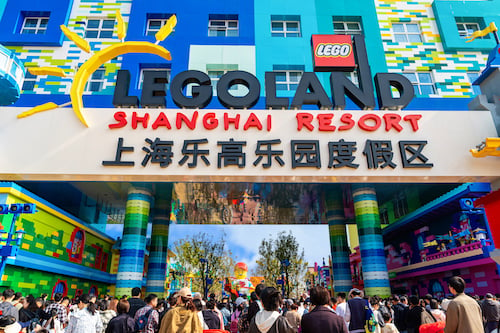
A World-First Built from Chinese Stories: Global IP Through a Local Lens
In developing LEGOLAND Shanghai, Merlin Entertainments made a deliberate choice not to replicate a standard global model. Instead, the park was built around a core conviction: that genuine differentiation comes from creating locally resonant content within an immersive environment – not from transplanting a proven formula and hoping it takes root.
The clearest expression of this philosophy is the world-first LEGO Monkie Kid Themed Land. Inspired by the classic Chinese narrative Journey to the West, the zone weaves traditional cultural elements into ride adventures and hands-on building experiences, allowing children to engage with Chinese heritage through the medium they know best: play. The ride that anchors the land blends physical and digital storytelling in a way that feels native to both the LEGO universe and to Chinese cultural memory.
Equally ambitious is the park’s reimagining of MINILAND. Using over 20 million LEGO bricks, LEGOLAND Shanghai’s MINILAND recreates landmarks, historical sites, and natural landscapes from across China offering guests a miniature national tour constructed entirely from interlocking plastic. The indoor setting further enables rich digital projection and light shows to animate the landscape, turning a beloved LEGOLAND classic into something genuinely new. Beyond these signature attractions, the park extends its immersive logic all the way to the dining table: brick-shaped burgers and Fengjing Town Bridge fruit mousse transform food and beverage from a supporting service into an integral component of the overall experience. Seasonal programming during Chinese New Year and the Mid-Autumn Festival adds another layer, connecting the LEGO brand to the emotional rhythms of Chinese family life throughout the year.
From Traffic Management to Relationship Management: The Industry’s Next Chapter
Looking ahead over the next three to five years, Jakobsen anticipates a market that moves decisively from incremental competition to what he calls “deep engagement.” Slowing growth, in his view, is not a threat but a filter – one that will reward companies with genuine content depth, operational excellence, and the creativity to keep relationships with guests alive long after the first visit.
For LEGOLAND Shanghai, the strategy unfolds on two tracks. The first is a continued deepening of the family focus: richer, more culturally resonant seasonal events and family interaction products designed to turn each visit into a chapter in an ongoing relationship, evolving what Jakobsen describes as a shift from “traffic operation” to “relationship management.” The second track is expansion – leveraging the cross-generational appeal of the LEGO brand to broaden the park’s guest base beyond the core family segment, positioning LEGOLAND Shanghai not merely as a theme park, but as “a destination to experience the LEGO brand in a more immersive way.” Strengthening collaboration with surrounding regional tourism resources to build a more integrated vacation ecosystem is also a stated long-term priority.
On the question of what international companies need most to succeed in China, Jakobsen’s counsel is direct: long-term commitment, cultural respect, and the humility to build local “growth capability” rather than coasting on global recognition. “Successful companies invest deeply in local teams, co-create with local partners, and continuously improve their operations,” he said, adding that treating China as a long-term market – rather than a short-term growth opportunity – is the only foundation on which stable partnerships can be built. His broader message to international peers carries an optimism grounded in mutual respect: China’s market is not only a vast consumer base, but an increasingly important source of creative ideas and model innovation – a fertile ground, as he put it, for incubating new IP with genuinely global appeal.
“We welcome global peers to visit LEGOLAND Shanghai,” Jakobsen said, “explore the world built with LEGO bricks, and discuss the future of the amusement industry together.”
Image: LEGOLAND Shanghai Resort