For more than 40 years, WhiteWater has played a defining role in the evolution of Asia-Pacific’s waterpark industry. From some of the region’s earliest large-scale aquatic developments through to today’s immersive, tourism-led destination resorts, the Canadian company has steadily expanded alongside Asia’s rapidly changing leisure landscape.
What makes the story particularly interesting is not simply the scale of the projects delivered, but the way WhiteWater established itself within the region long before many Western suppliers committed to permanent local operations. Today, with a full-service regional office in Shanghai and more than 300 completed projects across APAC, the company operates less like an overseas manufacturer and more like a locally embedded development partner with global reach.
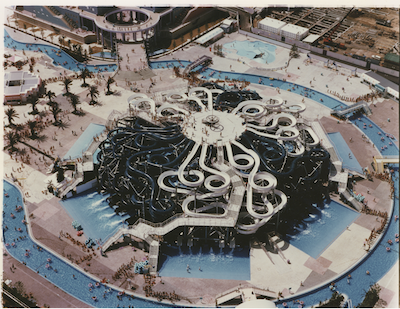
That long-term regional commitment can be traced back to the late 1980s. WhiteWater’s first export project into China was delivered for the Asian Games in Beijing in 1989, while one of its earliest landmark attractions was the record-breaking “Super Whooper” tower at Rokko Island in Japan in 1991, featuring 50 slides and helping establish the scale and spectacle that would later define modern Asian waterparks.
Since then, the region has become central to WhiteWater’s global growth story.
Across China, Japan, South Korea, Thailand, Indonesia, Malaysia, Vietnam and Australia, the company’s attractions have consistently appeared among the most attended and most awarded waterparks in Asia. Destinations such as Guangzhou Chimelong Water Park, Waterbom Bali, Studio City Water Park, Caribbean Bay and Sunway Lagoon have helped define what modern aquatic entertainment can look like across the region.
The company officially entered the Chinese market with the design and supply of attractions for Chimelong Water Park, which remains the world’s most attended waterpark. Since then, WhiteWater has continued expanding its customer base throughout China with major groups including OCT, Sunac and Melco among its long-term clients.
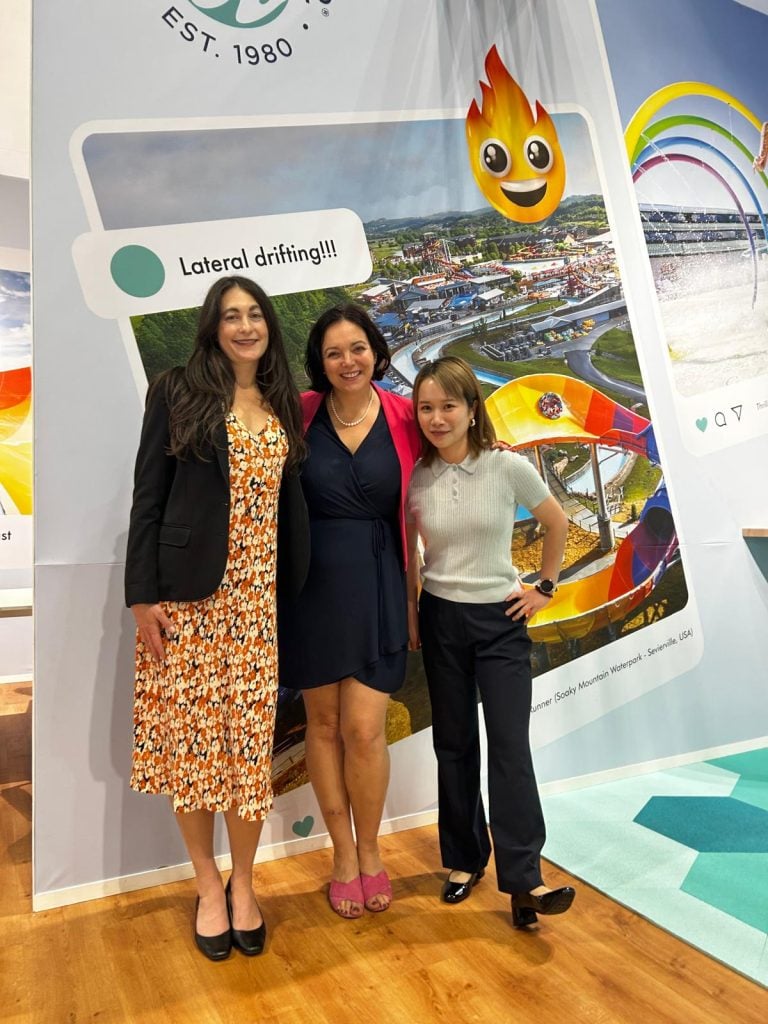
According to Megan Mo, Senior Manager, APAC at WhiteWater, Vietnam is currently one of the region’s most exciting growth markets.
Following the opening of the tallest water slide tower in Asia at VinWonders Vu Yen in late 2025, the company this year celebrated the debut of Southeast Asia’s first SlideWheel® at VinWonders Nha Trang. Meanwhile, Sun World Vung Tau recently opened a major new waterpark development featuring 32 WhiteWater slides, including what the company describes as the world’s longest Mini Blaster and the world’s largest AquaForms installation with 20 platforms.
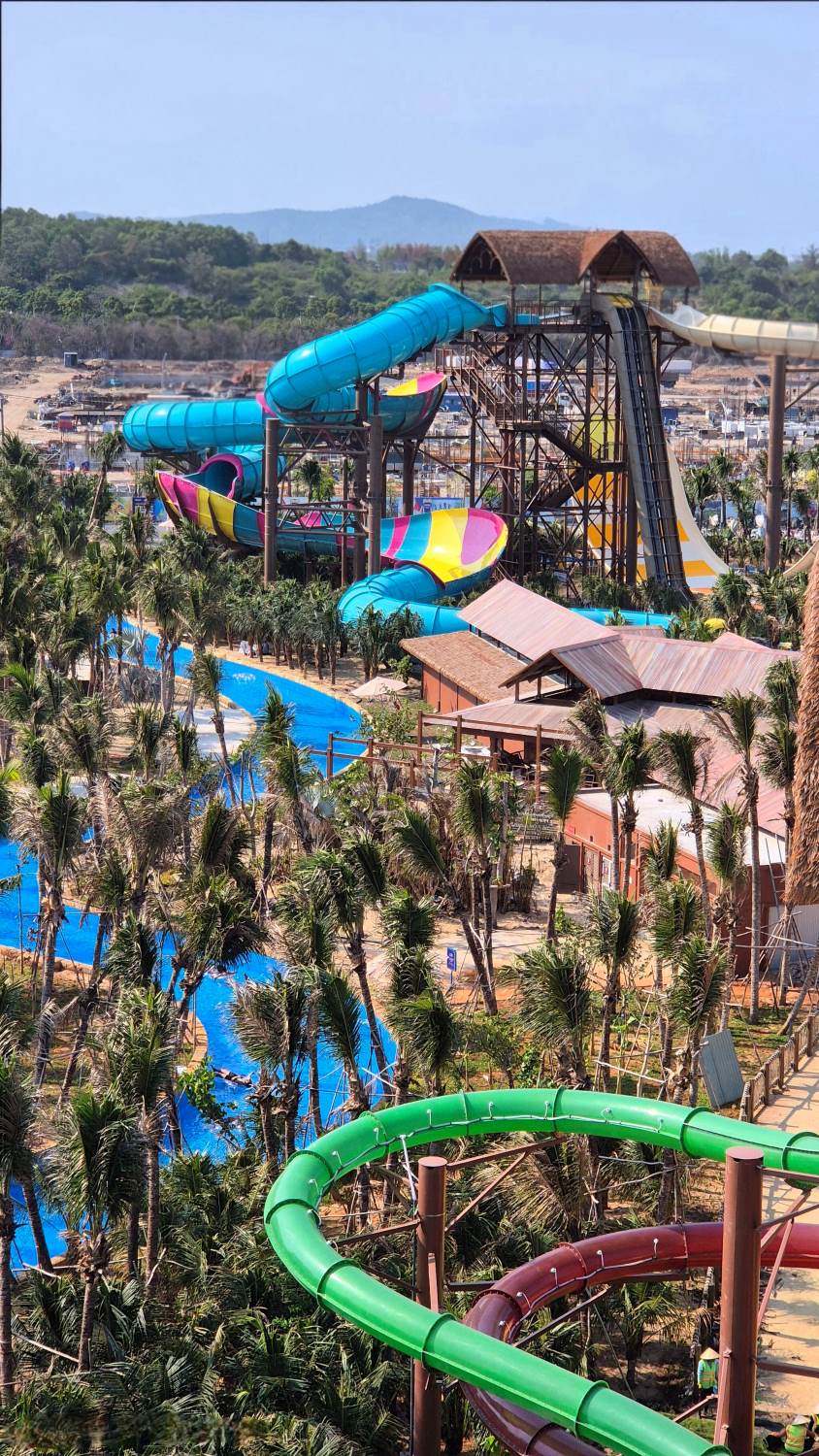
The Vung Tau project highlights how Asian operators continue pushing for highly visual, technically ambitious attractions designed to create immediate destination impact. Attractions such as “Mystic Ocean Voyage,” promoted as Asia’s first and the world’s longest Mini Blaster, and “Serpent’s Aquarium,” Asia’s first Wall Runner attraction, reflect the increasing importance of social-media-friendly experiences and distinctive skyline elements within modern park design.
WhiteWater says this demand for spectacle is particularly pronounced within China.
According to Shanghai-based Project Manager Will Wang, Chinese operators differ from many other Asian markets in three significant ways: speed, expectations and cross-industry thinking.
“Chinese operators often expect projects to move from design to opening within the same year,” Wang explained, describing timelines dramatically shorter than the three-to-five-year development cycles common elsewhere. “This demands highly agile project management, flexible supply chains, and around-the-clock global collaboration.”
He also noted that Chinese developers increasingly expect suppliers to operate as proactive long-term partners rather than simple ride manufacturers.
“Operators are deeply involved in every project detail and expect safety, speed and innovation all at once,” he said. “Rather than simply delivering equipment, suppliers are expected to act as problem-solving partners with transparent communication and advanced project management capabilities.”
Perhaps most significantly, many Chinese investors now approach waterparks as part of much larger mixed-use tourism ecosystems. Developers from real estate, hospitality and commercial backgrounds increasingly see waterparks not as standalone attractions, but as anchor experiences capable of driving hotel stays, retail spending and broader destination value.
That wider industry shift is something WhiteWater believes will define the next decade across Asia.
As Megan Mo explained, the attractions sector throughout the region is becoming increasingly experience-driven, integrated and value-focused. Guests are no longer simply looking for large rides or headline attractions. Instead, operators are increasingly asking whether experiences are immersive enough to justify overnight stays, repeat visits and social sharing.
As a result, more projects are combining waterparks with hotels, entertainment districts, retail, family entertainment centres and sports facilities to create all-day or multi-day destinations. WhiteWater believes guests increasingly value convenience, comfort and broad family appeal as much as thrill intensity itself.
That philosophy can already be seen at projects such as Studio City Water Park, where WhiteWater supplied 100% of the water slides and aquatic play equipment for Macau’s first large-scale integrated indoor-outdoor waterpark.
“Chinese investors now approach waterparks as part of much larger mixed-use tourism ecosystems.”
For operator Melissa Chung, the attraction represented far more than a traditional waterpark investment. Instead, it became part of Macau’s wider transition toward diversified tourism and family-focused entertainment beyond gaming.
“There are other manufacturers,” Chung explained, “but I think the quality of WhiteWater slides is number one. If you ask me, their products are great, but the after sales support is even better.”
That emphasis on lifecycle partnership and operational support appears repeatedly throughout WhiteWater’s APAC strategy.
The company’s Shanghai-based regional team includes waterpark designers, slide path designers, engineers, landscape architects and project managers supported by WhiteWater’s global network of safety, operations and maintenance specialists. Importantly, the APAC office also provides ongoing performance services and ride maintenance support within the region’s own time zone – something increasingly valued by operators running large-scale, year-round destinations.
WhiteWater says it was the first waterpark supplier to establish a full-service office in Asia, reflecting the company’s long-term view of the region’s importance.
The company’s portfolio also reflects the growing diversification of Asia’s waterpark market itself.
Projects such as Vana Nava Water Jungle helped pioneer immersive tropical landscaping and nature-driven environments, while mature operators including Wet’n’Wild Gold Coast and Nagashima Spaland continue reinvesting in major new attractions to maintain competitive positioning.
Elsewhere, WhiteWater points to projects such as Water World Ocean Park Hong Kong as examples of highly collaborative regional development. The award-winning park, developed alongside Water Technology Inc., required extensive technical masterplanning and aquatic engineering due to its challenging terraced mountainside location.
Meanwhile, in western China, Dream Space Water Park in Chongqing represents another example of the scale now emerging across the region. Covering 160,000 square metres and featuring more than 40 water slides across 18 attractions supplied by WhiteWater, the development was created to support Chongqing’s wider tourism ambitions and strengthen the Chengdu-Chongqing Economic Circle as a cultural and leisure destination.
Even outside Asia, the company continues expanding its regional partnerships. In Australia, WhiteWater recently celebrated its first collaborative project with Swimplex Aquatics at the Denise Spencer Memorial Pool in Queensland.
Collectively, the projects reflect how WhiteWater’s role within Asia-Pacific has evolved over the past four decades. What began as exporting slide technology into emerging markets has steadily transformed into a broader destination-development partnership model centred around localisation, operational expertise and long-term guest experience strategy.
Today, as Asian attractions increasingly focus on integrated tourism, sustainability, immersive design and year-round operation, WhiteWater’s regional approach appears closely aligned with where the market itself is heading.
Images: Whitewater West