Copenhagen’s Tivoli Gardens opens Hikari this August: a 2,000 m² Japanese-inspired district with two new attractions and a multi-hundred-million-kroner investment.
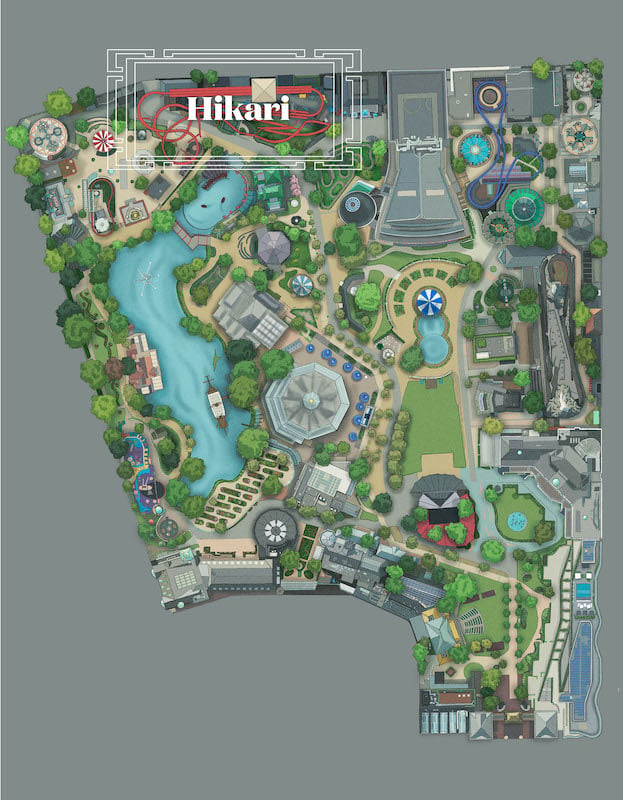
Tivoli Gardens is set to open its most ambitious development in its 183-year history. This August, the Copenhagen landmark will unveil Hikari – meaning ‘light’ in Japanese – a fully reimagined themed district covering more than 2,000 square metres on the site of the park’s former Asian-inspired area. The project represents an investment of several hundred million Danish kroner and has been two years in the making.
The scale matters. Tivoli Gardens sits on a fixed footprint of 80,000 square metres in central Copenhagen and cannot expand outward. Every major development must work within what already exists. Hikari does not add land. It transforms it – fundamentally enough to create what the park describes as the largest themed area in its history.
Susanne Mørch Koch, chief executive officer of Tivoli Gardens, said: “We are therefore delighted to unveil Hikari, a truly visionary new area. Hikari demonstrates how Tivoli Gardens can continue to renew itself, surprise guests and create world-class experiences while preserving the unique character that has made the Gardens so special for nearly two centuries.”
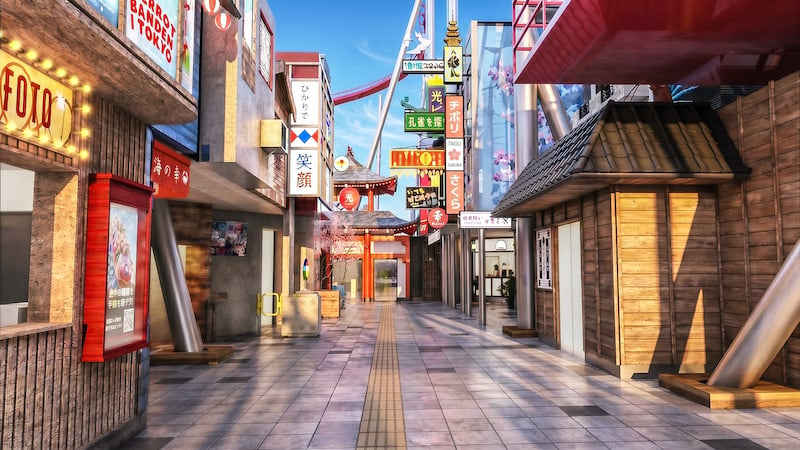
The design approach is deliberate. Hikari is not a reconstruction of Japan. The park’s creative team has drawn on Japanese architectural, landscape and urban design principles and reinterpreted them through Tivoli’s own theatrical lens. Authentic reclaimed doors, windows and vintage objects sourced from Japan have been incorporated throughout. Some 60 tonnes of traditional roof tiles – supplied by Japanese manufacturers Tsuruya and Eishirou Kawara – were shipped to Copenhagen specifically for the project. The area will also feature an artwork by Japanese artist Takashi Murakami, alongside street art and decorative installations.
Two entirely new attractions anchor the guest experience. Hotel Hikari, manufactured by Gosetto, takes visitors through a funhouse sequence of mechanical illusions and scenic effects – a vortex tunnel, a tilted hotel room and an infinity mirror maze among them. The premise is simple: guests enter an ordinary hotel lift and exit into something else entirely. Typhoon’s Eye, manufactured by SBF Visa Group, is a zero-gravity rotating drum ride. Riders are spun at high speed; as centrifugal force takes hold, the floor drops away. The park states it is unlike any other high-G experience in Scandinavia.
Both sit alongside The Demon, one of Tivoli’s established roller coasters, which has been given an entirely new visual identity and integrated into the Hikari streetscape. Running through the area like an elevated railway, it now serves as a structural part of the theming rather than a standalone attraction.
Food is built into the concept. Five street food venues will operate within Hikari, several developed in collaboration with Danish culinary partners. The approach draws on contemporary Japanese food culture while being designed to meet Tivoli’s existing quality standards.
Søren Tegen Pedersen, chief executive officer of Wonderful Copenhagen, added context: “Copenhagen competes with other European capitals for visitors, talent and international attention. Tivoli Gardens is one of Denmark’s most iconic cultural landmarks and has a unique ability to combine heritage with innovation. Hikari is a great example of how a destination can continue to develop while strengthening the overall visitor experience in Copenhagen.”
Tivoli Gardens recorded attendance of 4.25 million visitors in 2024 – a 5.4% increase on the prior year, according to the TEA 2024 Index – confirming its position as the most visited attraction in the Nordic region. The opening of Hikari is timed for late summer 2026. A confirmed date has not yet been announced.
Image: Tivoli Gardens